Zigbee Compatible Devices
Smart home devices that use the Zigbee wireless protocol. Every device on this page is in the Zigbee2MQTT supported-devices database, meaning it has been tested and confirmed to work with Home Assistant, Hubitat, openHAB, deCONZ and other Zigbee-aware platforms via a Zigbee coordinator.
How Zigbee compatibility works
Zigbee is a low-power wireless mesh protocol used by thousands of smart home devices: sensors, switches, bulbs, locks, blinds. Because Zigbee is an open standard, devices from different brands can be mixed on the same network.
To use Zigbee devices you need a Zigbee coordinator: a USB radio that creates and manages your local Zigbee network. Popular coordinators include the Home Assistant SkyConnect, Sonoff Zigbee 3.0 USB Dongle Plus and ConBee II. The coordinator plugs into a host that runs Home Assistant, Zigbee2MQTT, deCONZ, ZHA, Hubitat or a similar Zigbee bridge.
Devices on this page are listed in the Zigbee2MQTT supported-devices database, the most comprehensive open registry of confirmed-working Zigbee devices. If a device is here, the Zigbee2MQTT community has tested it and added a converter, so it works on any platform that uses Zigbee2MQTT (and usually on ZHA too, with some caveats).
New to the protocol? Our Zigbee introduction covers mesh basics, coordinator buying advice, and tips for avoiding the common pitfalls (channel interference, weak repeaters, sleepy-end-devices). Comparing options? See Zigbee vs Z-Wave vs Matter.
Need a Zigbee coordinator?
Sonoff Zigbee 3.0 USB Dongle Plus, Home Assistant SkyConnect and ConBee II are all popular USB radios for Zigbee2MQTT and ZHA.
Works with these ecosystems
Browse by category
Featured devices
See all 3,599 →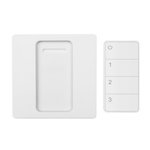
AduroSmart
Remote scene controller
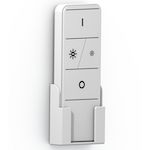
Aldi
MEGOS switch and dimming light remote control
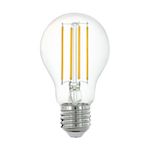
AwoX
Dimmable filament lamp
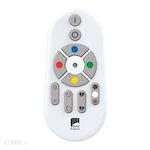
AwoX
Remote controller
AwoX
LED light with color temperature
Bega
LED lamp with adjustable LED color temperature (Tunable White - RGBW) for use in luminaires with E27 lamp base
Calex
LED A60 Zigbee GLS-lamp
Calex
LED A60 Zigbee RGB lamp
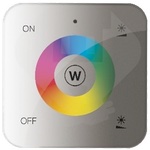
Calex
Smart Wall Switch, wall mounted RGB controller
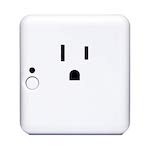
Centralite
White Swiss power outlet switch with power meter
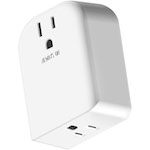
Centralite
3-Series smart dimming outlet
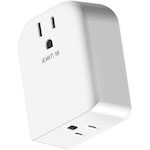
Centralite
3-Series smart outlet appliance module
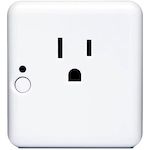
Centralite
3-Series smart outlet
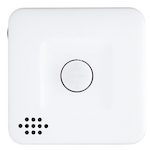
Centralite
Micro-door sensor
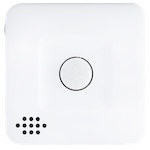
Centralite
3-Series micro motion sensor
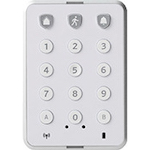
Centralite
3-Series security keypad
Frequently asked questions
What devices use Zigbee?
Zigbee is widely used for battery-powered sensors (motion, contact, temperature, leak, vibration), smart bulbs (Philips Hue, Innr, Ikea Tradfri), smart switches and dimmers, smart plugs, door locks, and smart blinds. Many low-cost smart home brands (Aqara, Sonoff, Tuya/Lonsonho, Ikea, Innr) standardise on Zigbee for the lower cost and battery life advantages over Wi-Fi.
Do I need a Zigbee hub?
You need a Zigbee coordinator: a USB radio plus software that bridges Zigbee to your platform. Common combos are Home Assistant + SkyConnect (or Sonoff dongle) + Zigbee2MQTT or ZHA. You can also use a vendor hub like the Hue Bridge or Aqara M2, though those are usually limited to that vendor's devices unless you use a workaround.
Are Zigbee devices interoperable across brands?
Mostly yes, but not always. Zigbee uses standard "clusters" for things like on/off, brightness, colour temperature, etc. Devices that stick to standard clusters work everywhere. Many vendors add proprietary attributes (Tuya is the worst offender) which need device-specific converters. This is where Zigbee2MQTT shines, since the community maintains converters for thousands of devices.
Does Zigbee work with Apple Home or Google Home?
Not directly. Zigbee devices need to be exposed through a hub that integrates with those ecosystems. The Hue Bridge exposes Hue Zigbee bulbs to Apple Home and Google Home; Aqara M2 exposes Aqara devices to Apple Home; Home Assistant or SmartThings can bridge any Zigbee device to any ecosystem with the right configuration.
How is Zigbee different from Z-Wave or Matter?
Zigbee and Z-Wave are both low-power mesh protocols, similar in capabilities. Z-Wave uses a sub-1GHz frequency (so less Wi-Fi interference) but devices are more expensive. Zigbee is cheaper and more widely available but operates on the crowded 2.4 GHz band. Matter is a newer application-layer standard that runs over Wi-Fi or Thread (not Zigbee). Matter is converging the ecosystem, but Zigbee's installed base remains huge.
Ready to find a specific device?
Search all Zigbee-compatible devices